
I still remember the scratchy wool of my Sunday best and the smell of old hymnals. I was maybe eight years old, sitting in a Christmas Eve service that felt like it had been going on for three days. The pageant was peaking. A girl from my third-grade class, wrapped in a powder-blue sheet, sat center stage clutching a plastic doll like it was fragile glass. I nudged my dad, confused by the hierarchy of the scene, and whispered, “Why does she get the big chair?”
He didn’t look up from his program. He just smiled out of the corner of his mouth and said, “Because that’s the mom.”
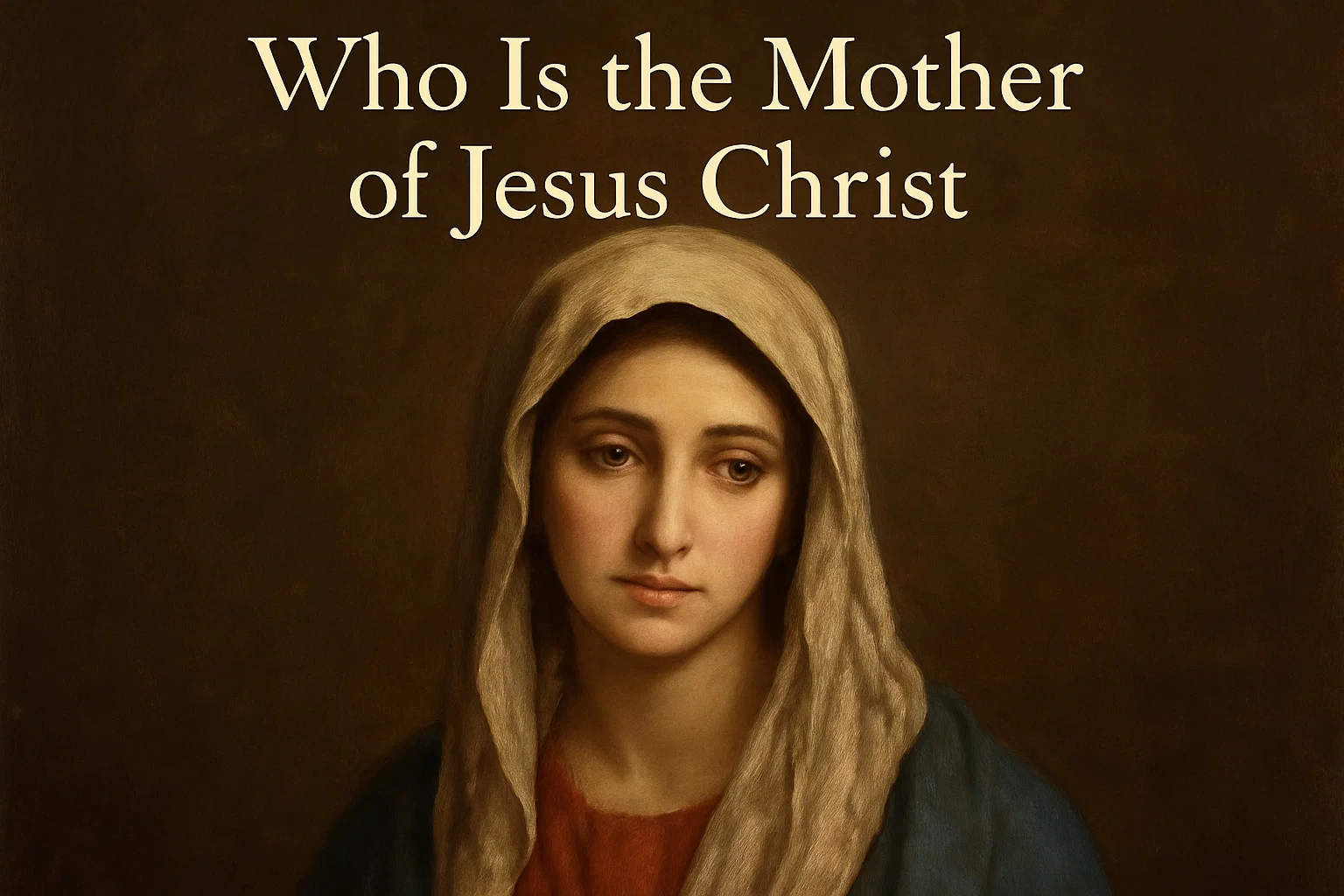
It seemed simple then. Moms get the best seat. But as I’ve gotten older, raised a few rowdy kids of my own, and actually dug into the history, the answer has become profoundly more complicated. When we really ask, who is the mother of Jesus Christ, we aren’t just looking for a biological fact or a name on a census. We are diving into a story of grit, terrifying prophecies, and a kind of faith that makes our modern comfort zones look pathetic.
Mary of Nazareth wasn’t the porcelain figure you see on your grandmother’s mantelpiece. She was real. She was likely a teenager. She lived in a rough, dusty corner of the Roman Empire, and she said “yes” to a question that would cost her absolutely everything. Her role doesn’t stop at the manger. It stretches from the ancient whispers of the Old Testament right to the foot of a bloody cross and into the chaotic upper room of Pentecost.
More in About Jesus Category
Did Jesus Christ Come in the Flesh
Key Takeaways
- She wasn’t a passive vessel: Mary’s “fiat” was a conscious, dangerous choice to accept a mission that could have gotten her killed.
- Her role changes constantly: She goes from a protective mother teaching a child to walk, to a disciple following her own Son.
- She anchors the theology: Without Mary, Jesus isn’t fully human. Her humanity guarantees His.
- Prophecy isn’t just a metaphor: Her life fulfilled specific, hard-to-believe requirements from centuries prior.
- The divide is bridgeable: Catholics and Protestants argue about her, but both sides agree she is the model of total surrender.
Why Does the Identity of Mary Matter So Much?
You might be thinking, Can’t we just say she gave birth to Jesus and move on?
I used to think that way. It’s cleaner. It’s easier. But here is the problem: if you ignore Mary, you risk turning Jesus into a ghost. If we sideline the mother, we turn the Son into a divine hologram who just sort of floated down to earth.
But He didn’t float. He was born.
Think about the implications of that. He had to learn to walk. He had to learn to speak Aramaic. He had to learn how to hold a spoon. Who taught Him the Psalms? Who bandaged His knees when He scraped them on the rocky ground of Nazareth? The Bible points squarely at Mary.
The theological stakes are massive here. If Mary isn’t the true mother, then Jesus isn’t truly human. And if He isn’t human, He can’t represent me or you on the cross. He becomes an alien visitor rather than a brother. The early church fought tooth and nail to defend the title Theotokos—God-bearer. They didn’t do it just to give Mary a fancy title; they did it to protect the reality of Him.
How Does the Bible Introduce the Teenager from Nazareth?
Luke’s Gospel doesn’t give us a resume or a backstory. It gives us a map dot: Nazareth.
Now, you have to understand Nazareth. In the first century, this wasn’t a cultural hub. It was a backwater. It was the kind of town people made jokes about. I remember a college professor of mine, a guy who had spent years in the Holy Land, telling us, “If you were from Nazareth, you didn’t put it on your business card.”
Here we find a young woman engaged to a carpenter named Joseph. We skip over the engagement part too fast. In Jewish culture, betrothal wasn’t just “dating with a ring.” It was legally binding. You were married in every way except the living arrangements. Breaking it required a divorce.
Then, the air changes. Gabriel shows up. He doesn’t enter with a trumpet blast or a light show. He enters with a conversation that likely scared the life out of her. He calls her “highly favored.”
I can only imagine the adrenaline spike. In the Bible, when angels show up, grown men usually fall on their faces and think they’re about to die. Mary? Scripture says she was “greatly troubled.” But she didn’t run. She listened.
What Did Gabriel Actually Say to Her?
He dropped a bombshell that completely shattered her life plan. He told her she would conceive in her womb and bear a son.
“How will this be,” Mary asked the angel, “since I am a virgin?” (Luke 1:34).
I love this moment. Look at the difference between her question and Zechariah’s question earlier in the same chapter. Zechariah asked out of doubt—he wanted proof. Mary asked out of logic. She knew how biology worked. She wasn’t asking for a sign; she was asking for the method. Gabriel explains that the Holy Spirit will overshadow her.
Did She Really Have a Choice in the Matter?
This is where I get defensive when people call Mary passive.
God did not force the Incarnation upon her. He didn’t treat her like an incubator. He waited for an answer. The entire history of salvation paused, waiting for a teenager to speak.
“I am the Lord’s servant,” Mary answered. “May your word to me be fulfilled.”
We call this the Fiat. It sounds pretty in Latin. In reality, it was a terrifying consent. In that split second, she accepted social stigma. She accepted the likely end of her marriage. She accepted a life of total uncertainty.
A few years ago, I faced a major career shift that required moving my family across the country. I agonized over it for six months. I made pros and cons lists. I lost sleep. Mary accepted a mission that would alter the cosmos in the span of a heartbeat. That isn’t passive. That is active, aggressive faith.
What Makes the ‘Virgin Birth’ Non-Negotiable for Believers?
Skeptics stumble hard here. I have a good buddy, a brilliant engineer who builds bridges for a living. We grab coffee sometimes, and he tells me, “I like the moral teachings of Jesus, I really do. But the virgin birth? That’s where you lose me. The math doesn’t work.”
I get it. It defies the laws of nature. That’s the point.
The Bible frames this miracle as essential, not optional. Matthew 1:22-23 tells us this happened to fulfill what the Lord said through the prophet Isaiah: “The virgin will conceive and give birth to a son, and they will call him Immanuel.”
There is a deep logic to it. If Jesus had a biological human father, He would inherit the sinful nature of Adam. It’s the factory setting for humanity. The virgin birth breaks that chain. It allows Jesus to be the “Second Adam”—fully human, yet fully divine and distinct from the curse of sin. Mary is the guarantor of His humanity, while the Holy Spirit guarantees His divinity.
How Did She Handle the Scandal of an Unwed Pregnancy?
Let’s take off the rose-colored glasses for a second. Mary was pregnant. She was unmarried. She lived in a religious culture where adultery could get you stoned to death. At the very least, it meant total social ostracization.
Matthew’s gospel is blunt: Joseph planned to divorce her quietly. He was a righteous guy. He didn’t want to expose her to public disgrace, but he also knew the kid wasn’t his. It took divine intervention—a dream—to convince him to stay.
Imagine the whispers in the market. Imagine the looks from neighbors when she started showing. When we ask who is the mother of Jesus Christ, we are talking about a woman with incredibly thick skin. She bore the shame of the world’s judgment to bring the Savior into the world. She walked a lonely path long before her Son walked to Calvary.
What Do We Know About the ‘Lost Years’ of Motherhood?
The Bible goes silent for a long time. We have the birth, the chaotic flight to Egypt to escape Herod’s genocide (which makes Mary a refugee, by the way), and then… nothing. Silence. Until Jesus is twelve.
Did She Ever Lose Her Patience?
Luke 2 gives us the only glimpse of Jesus as a boy. The family goes to Jerusalem for Passover. On the way back, Mary and Joseph realize Jesus isn’t with the caravan.
Panic. Absolute panic.
As a dad who once lost sight of my son in a crowded Home Depot for about forty-five seconds, I feel this in my gut. My heart hammered against my ribs. They searched for three days. Three days of thinking you lost the Messiah.
When they finally find Him in the temple, sitting with the teachers, Mary sounds like any terrified mother: “Son, why have you treated us like this? Your father and I have been anxiously searching for you.”
Jesus’s answer—”Didn’t you know I had to be in my Father’s house?”—is a gentle reminder of who He really is. But the scripture notes that Mary “treasured all these things in her heart.” She was learning, day by day, what it meant to raise God. She had to learn to let go.
Did Mary Push Jesus into His First Miracle?
Fast forward eighteen years. We are at a wedding in Cana.
Weddings in that culture were community events. Running out of wine wasn’t just a party foul; it was a massive social failure. It brought shame on the groom’s family.
Mary turns to Jesus. She doesn’t ask a question. She just states a fact: “They have no wine.”
Jesus replies, “Woman, why do you involve me? My hour has not yet come.”
Some people read this and think Jesus is being rude. I don’t see it that way. He uses the term “Woman” (Gunai), which was actually a term of respect, like saying “Ma’am.” But He is establishing a boundary. His ministry runs on the Father’s clock, not his mother’s.
But look at what Mary does. She doesn’t argue. She doesn’t pout. She turns to the servants and delivers the best advice in the entire Bible: “Do whatever he tells you.”
She knew who He was. She trusted His power even before He had publicly demonstrated it. She wasn’t just His mother here; she was the first believer to kickstart a miracle.
Did Mary Have Other Children?
You want to start a fight at a theology conference? Bring this up.
- The Protestant View: Most Protestants (myself included) believe Mary and Joseph had a normal marriage after Jesus was born. We point to verses like Matthew 13:55, which lists brothers named James, Joseph, Simon, and Judas, and mentions sisters. It makes Mary feel more relatable to us.
- The Catholic/Orthodox View: These traditions hold to the “Perpetual Virginity of Mary.” They interpret the word “brothers” (adelphoi) as cousins or close kin, arguing Mary remained consecrated to God alone.
Regardless of where you land on the sibling chart, the Bible makes one thing crystal clear: Jesus was her firstborn. Her primary focus, her agony, and her glory were wrapped up in Him.
Where Was She During the Crucifixion?
This is the part that gets me every time.
When the soldiers came to the garden, the disciples fled. Big, tough fishermen ran into the dark. Peter, the rock, denied he even knew Jesus.
But Mary stood there.
John 19 records the scene. She stood near the cross. She didn’t faint. She didn’t look away. She watched the nails drive into the hands she used to wash when he was a toddler. She watched the lungs she used to listen to struggle for air. The prophecy given to her by Simeon at the temple thirty years earlier—”And a sword will pierce your own soul too”—was coming true in real-time.
Why Did Jesus Give Her to John?
In His dying moments, Jesus looked down. He saw the two people He loved most: His mother and the disciple John.
“Woman, here is your son,” and to the disciple, “Here is your mother.”
Even while suffocating under the weight of the world’s sin, Jesus made sure his mom was taken care of. He didn’t entrust her to his “brothers” (who didn’t believe in Him yet), but to John. This created a new family dynamic. Who is the mother of Jesus Christ? In that moment, she became the mother of the faithful. The church adopted her, and she adopted the church.
Is Mary the ‘Queen of Heaven’ or a Humble Servant?
Turn to the book of Revelation, chapter 12. It’s a wild chapter. We see a “woman clothed with the sun, with the moon under her feet and a crown of twelve stars on her head.” She gives birth to a male child who will rule all the nations.
Catholic theology often identifies this woman as Mary, crowned in heaven. Many Protestant scholars view the woman as a symbol of Israel or the Church giving birth to the Messiah.
Honestly? It’s probably both. Mary represents the faithful remnant of Israel. She is the bridge. But even in this exalted imagery, notice where the power lies. Her glory comes solely from the Son she bears. The moon and stars are just accessories; the focus is the Child.
How Should We View Mary Today?
I have friends who are terrified of honoring Mary because they don’t want to accidentally worship her. They treat her like radioactive material—don’t get too close or you might become Catholic. I also have friends who pray the Rosary every morning.
But if we stick strictly to the Bible, we find a middle ground that demands respect.
- She is Blessed: Scripture says, “From now on all generations will call me blessed” (Luke 1:48). If we refuse to call her blessed, we are ignoring the Bible.
- She is a Model: She shows us how to follow Jesus. She was there at the start, and she was there in the Upper Room in Acts 1:14, praying with the early church.
She never draws attention to herself. Every time Mary speaks in the Bible, she points to God or to Jesus. She is the ultimate spotlight operator. She keeps the beam firmly on her Son.
Conclusion
She was a courageous teenager who accepted a mission that should have crushed her. She was a refugee who protected her child from a paranoid tyrant. She was a mother who had to do the hardest thing any parent does—let her son go. And she was a disciple who stood by the cross when everyone else ran for the hills.
We don’t need to worship her to recognize that she is vital. We just need to look at her life and say, “I want to trust God like that.”
When I look back at that Christmas pageant now, I realize my dad was right, but he was also understating it. She didn’t just get the big chair because she was the mom. She got the big chair because, without her brave “yes,” the story of our salvation wouldn’t have happened the way God intended. She is the mother of our Lord, and her legacy is etched into the very foundation of our faith.
FAQs – Who Is the Mother of Jesus Christ
Why is Mary considered more than just the biological mother of Jesus?
Mary is considered more than just Jesus’s biological mother because her role encompasses faith, obedience, and a profound contribution to salvation history, stretching from prophecy to the foot of the cross.
What is the significance of Mary’s ‘fiat’ in the biblical account?
Mary’s ‘fiat’—her willing consent to God’s plan—was a courageous and active act of faith, accepting social stigma and uncertainty to fulfill her divine role, exemplifying active trust in God’s call.
Why do many Christian traditions emphasize the virgin birth of Jesus, and why is it considered essential?
The virgin birth is emphasized because it fulfills prophecy and ensures Jesus’s divine nature, preventing inheritance of original sin from human parents, establishing His dual nature as fully human and fully divine.
What do we know about Mary’s life during the years when Jesus was a child and young adult?
The Bible provides limited information; it recounts events like the flight to Egypt and Jesus’s visit to the temple at age twelve, but much of her life during those ‘lost years’ remains a silence in scripture.
What is the biblical view of Mary’s role during the Crucifixion?
Biblically, Mary stood near the cross, witnessing Jesus’s suffering, demonstrating her unwavering presence and faith during His most excruciating moment, fulfilling prophecies about her deep suffering.